Note: The following is a lie:
"The Largest Torrent of New Profits Ever Unleashed"
"...Right now the biggest redirection of capital the world has ever seen is underway. Billions of dollars are leaving the once-rock solid U.S. markets and flooding into blue-chip companies based outside of the U.S. There are many reasons it's happening: the U.S. dollar is flagging, mostly under a growing mountain of debt. Global investors view mature U.S. markets as having less and less room for growth. They see the future in emerging powerhouses like China, India and other once secondary economies that are beginning to stir.Quite frankly though, the reasons aren't as important as the trend itself.Here's the secret: Know where the money's headed and you'll get rich."
What is wrong with this guy's assertions? First of all, capital is flowing INTO the US, not out of it. How do we know that? Because those foreigners are still lending us money to pay for our deficit. If they weren't, our interest rates would skyrocket.
Also, the US dollar is NOT flagging.
And the 'mature' markets of the US are also very stable ones. If you had a chunk of change, wouldn't you want to put it in a stable place? However, if you had a little change and wanted to get rich quick, feeling left out of the tech and housing booms, then you would listen to this guy.
Money is still being sent to the US markets for investment because it is still widely seen as a safe place for your money. And as for growth, returns across the planet are poor. The US is still relatively a good place for placing your money because there is some return on it. (See Greenspan's remarks on accepting low returns for higher risks, though.)
The message at the top is designed for gamblers, people who base their investment decisions 'instinct' rather than numbers and analysis. They are the "I have inside information" or "I'll hop on the next trend and get rich" feelings of people who view investing like going to the track. It's sad.
Econo-Girl read somewhere that when people make investments that go well, they think of themselves as smart. When investments go bad, they blame bad luck. The emotional aspects of investing are often the biggest problem people have in making choices that take care of them.
That is why Econo-Girl HATES, LOATHES, DESPISES casinos. Those sneaky dirtbags do everything they can to get Econo-Girl off of her analytical game. No clocks, disorientation, sleazy slot machines where you no longer have to even move your arm to play, all are examples of dirty tricks to get a person to make poor decisions.
The author of the above quote is the same or worse. He is pretending to offer investment advice based on patently false information. Does the author even KNOW anything about doing business in China or India? They are two radically different places. Econo-Girl bets he hasn't been to either of them.
Oh, and the author's primary claim of 'blue chip companies' off of US shores and how capital is leaving the US? Well, name ONE blue chip company in China, India, or Indonesia. They are emerging markets, right? A country becomes a high growth emerging market because it once had a third world economy and is changing.
It is the classic bait and switch. He calms the reader by mentioning blue chip companies, thereby evoking all of your feelings about that security, and then gets your greed in the game by nattering on about high growth in third world nations. The author of the above paragraph is a fraud and a con artist. Econo-Girl is mad.
9.28.2005

9.26.2005
Blast From the Past
This sophisticated lady is my great-grandmother. She looks a lot like my sisters.
Kill All Spam!
It seems that our host, Blogger, is getting beset with spam once again. Econo-Girl has a few suggestions, if she may be so bold.
Block all traffic from Blogger to the spam sites. Who's going to go there anyway?
Blogger has the resources to do an overload 'attack' on the spam sites. That would either crash the systems or bring them to a grinding halt. Then the spammers would make NO money at all.
More important here is how individual behaviour has the potential to ruin the Internet. Econo-Girl is reminded of a conference she attended at the Heritage Foundation. Some woman, who looked a little rabid, went on and on about medieval times and how there was a group of merchants that regulated its own behaviour and there was no need for government. The threat of being thrown out of the group was enough to enforce proper actions, because anybody thrown out would go broke.
She then made the case that that's all we need today. Hmmmm. If it was such a great system, why isn't it in place today? And how can we apply that arguement to the Internet? We can't. That's why these radical Libertarians are psycho. In her frame of reference, people bathed twice in a lifetime. Should we bring that back, too?
Block all traffic from Blogger to the spam sites. Who's going to go there anyway?
Blogger has the resources to do an overload 'attack' on the spam sites. That would either crash the systems or bring them to a grinding halt. Then the spammers would make NO money at all.
More important here is how individual behaviour has the potential to ruin the Internet. Econo-Girl is reminded of a conference she attended at the Heritage Foundation. Some woman, who looked a little rabid, went on and on about medieval times and how there was a group of merchants that regulated its own behaviour and there was no need for government. The threat of being thrown out of the group was enough to enforce proper actions, because anybody thrown out would go broke.
She then made the case that that's all we need today. Hmmmm. If it was such a great system, why isn't it in place today? And how can we apply that arguement to the Internet? We can't. That's why these radical Libertarians are psycho. In her frame of reference, people bathed twice in a lifetime. Should we bring that back, too?
9.25.2005
Here we go again...
Snow, Chinese officials discuss currency
By Mark Felsenthal Sun Sep 25, 4:14 AM ET
WASHINGTON (Reuters) - U.S. Treasury Secretary
John Snow on Saturday told Chinese officials greater exchange rate flexibility is necessary to help the global economy deal with economic distortions, a U.S. official said.
Econo-Girl needs a chuckle these days. Those Chinese didn't change enough for us? Why would they? They faked us out to shut us up for a while. If we want to talk about imbalances, let's talk about the US trade and budget deficit.
By Mark Felsenthal Sun Sep 25, 4:14 AM ET
WASHINGTON (Reuters) - U.S. Treasury Secretary
John Snow on Saturday told Chinese officials greater exchange rate flexibility is necessary to help the global economy deal with economic distortions, a U.S. official said.
Econo-Girl needs a chuckle these days. Those Chinese didn't change enough for us? Why would they? They faked us out to shut us up for a while. If we want to talk about imbalances, let's talk about the US trade and budget deficit.
9.23.2005
Greenspan, Katrina and Fannie Mae
Greenspan recently warned that Fannie Mae and Freddie Mac are overextended, like the rest of America. What Fannie Mae and Freddie Mac do are to take US mortgages and bundle them and to sell them as securities. Greenspan warned that
"Greenspan warned that as Fannie Mae and Freddie Mac increase in size relative to the Wall Street firms that help them hedge risk, their ability "to quickly correct the inevitable misjudgments inherent in their complex hedging strategies becomes more difficult." Forbes.com, article by Virginia Citrano. See above link.
Econo-Girl's concern is with the attacks of Mother Nature on our Gulf shores, many people will not be paying their mortgages back. What effect would this have on Freddie's and Fannie's ability to provide low-cost mortgages to Americans? And what will that do, in turn, to the housing market?
"Greenspan warned that as Fannie Mae and Freddie Mac increase in size relative to the Wall Street firms that help them hedge risk, their ability "to quickly correct the inevitable misjudgments inherent in their complex hedging strategies becomes more difficult." Forbes.com, article by Virginia Citrano. See above link.
Econo-Girl's concern is with the attacks of Mother Nature on our Gulf shores, many people will not be paying their mortgages back. What effect would this have on Freddie's and Fannie's ability to provide low-cost mortgages to Americans? And what will that do, in turn, to the housing market?
The Hurricane Tapes
National Public Radio has some explosive information on its morning show. It was the taped phone conversations of officials preparing for Katrina. Normally, Econo-Girl turns the radio off and goes back to sleep. Not this morning. She waited like an expectant cat.
It seems that FEMA did NOT have generators in place to deliver to the disaster zone. This requirement should not have been a surprise to them, as it was part of the disaster run-through they had done with local officials previously. Am I being redundant to say people died because of this? The generators were to have provided electricity for machines sick people depended on.
Econo-girl is the first one to admit she is a pain in the ass. I'm very good at what I do, but I am a pain in the ass. So is it too much to think that if the people in charge of FEMA disaster relief and preparedness were 'not getting it' that someone should have knocked on their hotel door and expressed it to them personally? That's the Econo-girl route. Of course, a lot of people hate me because of it. But, I mean, they live somewhere, don't they? So track them down. And I would bring Liesure Lad, because he can talk anyone into anything.
It seems that FEMA did NOT have generators in place to deliver to the disaster zone. This requirement should not have been a surprise to them, as it was part of the disaster run-through they had done with local officials previously. Am I being redundant to say people died because of this? The generators were to have provided electricity for machines sick people depended on.
Econo-girl is the first one to admit she is a pain in the ass. I'm very good at what I do, but I am a pain in the ass. So is it too much to think that if the people in charge of FEMA disaster relief and preparedness were 'not getting it' that someone should have knocked on their hotel door and expressed it to them personally? That's the Econo-girl route. Of course, a lot of people hate me because of it. But, I mean, they live somewhere, don't they? So track them down. And I would bring Liesure Lad, because he can talk anyone into anything.
9.21.2005
Interest Rates and Inflation
Saw some interesting ideas on inflation. The analogy Econo-Girl uses to represent the idea is a string being pulled at both ends. One end is supply. The other end of the string is demand.
When supply is low, that end of the string is being pulled back. When demand is low, that is the end that ismade slack.
So a healthy economy has a reasonably stable rope that more or less stays in place. If the supply end of the rope gets too slack from oversupply, then it takes less force on the demand end to pull. That's a lower cost to get supply.
Please have patience. Econo-Girl is just working out the kinks in this analogy.
With Katrina, supply has tightened up. So it takes more demand, and the willingness to pay more, to keep the rope stable. That means inflation.
Why does Econo-Girl think she is the only one who is going to believe this crazy analogy?
Runaway inflation is when supply is pulling back more and more, and in response, demand rushes forward to get more goods. That only prompts more pulling from supply. Soon the rope is dashing across the lawn. It is no longer a rope standing still. It is no longer a stable economy.
So what if the rope is stable, and then supply starts getting bigger and creating slack. If demand is low and stays there despite lower prices for supply, the rope is not taut, but loosely hanging. That is a recession. When the rope hits the ground, it is a depression. The rope is on the ground because there is no pull from either supply or demand.
Is anyone else out there having fun with this?
Econo-Girl thinks she will develop a series of graphics to demonstrate her idea better. Using an actual rope would be a good way to explain basic economics to children.
When supply is low, that end of the string is being pulled back. When demand is low, that is the end that ismade slack.
So a healthy economy has a reasonably stable rope that more or less stays in place. If the supply end of the rope gets too slack from oversupply, then it takes less force on the demand end to pull. That's a lower cost to get supply.
Please have patience. Econo-Girl is just working out the kinks in this analogy.
With Katrina, supply has tightened up. So it takes more demand, and the willingness to pay more, to keep the rope stable. That means inflation.
Why does Econo-Girl think she is the only one who is going to believe this crazy analogy?
Runaway inflation is when supply is pulling back more and more, and in response, demand rushes forward to get more goods. That only prompts more pulling from supply. Soon the rope is dashing across the lawn. It is no longer a rope standing still. It is no longer a stable economy.
So what if the rope is stable, and then supply starts getting bigger and creating slack. If demand is low and stays there despite lower prices for supply, the rope is not taut, but loosely hanging. That is a recession. When the rope hits the ground, it is a depression. The rope is on the ground because there is no pull from either supply or demand.
Is anyone else out there having fun with this?
Econo-Girl thinks she will develop a series of graphics to demonstrate her idea better. Using an actual rope would be a good way to explain basic economics to children.
Inflation Fears!
Once again, the Fed has raised interest rates. This time they mentioned fear of inflation despite the economic setback of Katrina.
Econo-Girl wonders whether anyone in America will ever name their daughter 'Katrina' again.
On the home front, Econo-Girl sent in her first application for a Federal job. It's just that I have this awful feeling about how this credit crunch/ high interest rates / awful deficit is all going to shake down in a few years.
Borrowing money will be REALLY hard within about two years.
Econo-Girl wonders whether anyone in America will ever name their daughter 'Katrina' again.
On the home front, Econo-Girl sent in her first application for a Federal job. It's just that I have this awful feeling about how this credit crunch/ high interest rates / awful deficit is all going to shake down in a few years.
Borrowing money will be REALLY hard within about two years.
9.19.2005
Hot Peppers
Econo-Girl is economizing again. She pulls out her Martha Stewart magazines
to make scrumptious meals that will hopefully replace our culinary joy in
restaurants.
After her heart attack at the grocery store bill, Econo-Girl can only
surmise that most economists do not do their own grocery shopping.
Inflation is evident in the cost of food.
And so, she makes the family meal. And during the process she cuts a pepper
that seemed benign enough except after cutting it, Econo-Girl scratched her
ear and IT BURNED FOR OVER AN HOUR.
Some juice of the pepper must be smudged in her kitchen because in drinking
her coffee, Econo-Girl's LIPS BURNED from the coffee mug.
So now we understand why that pepper spray is so good. And eco-friendly as
well.
9.16.2005
Good One
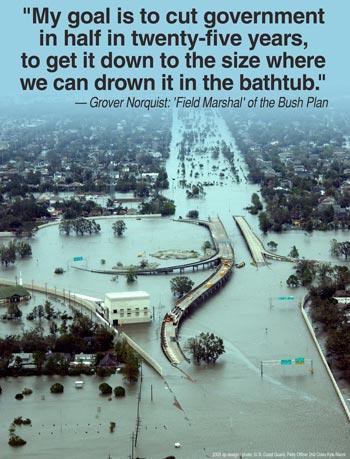
Sent to Econo-Girl by a friend.
And have you heard:
Q: What is George Bush's stand on Roe v. Wade?
A: He doesn't care how black people get out of New Orleans.
Subscribe to:
Posts (Atom)